Notes in music are symbols that represent the pitch and duration of sounds in a song or musical piece. Musicians use these notes to read, write, and perform music clearly and in an organized way. Each note shows how high or low a sound should be and how long it should last. By combining different notes, composers create melodies, rhythms, and harmonies that make music enjoyable and meaningful.
What Are Notes in Music and Why They Matter
Music uses special symbols to show how sounds should be played or sung. These symbols are called notes in music, and they help musicians understand rhythm and pitch. Every song depends on notes because they guide the timing and tone of each sound. Without clear notes, musicians would struggle to play the same melody together.
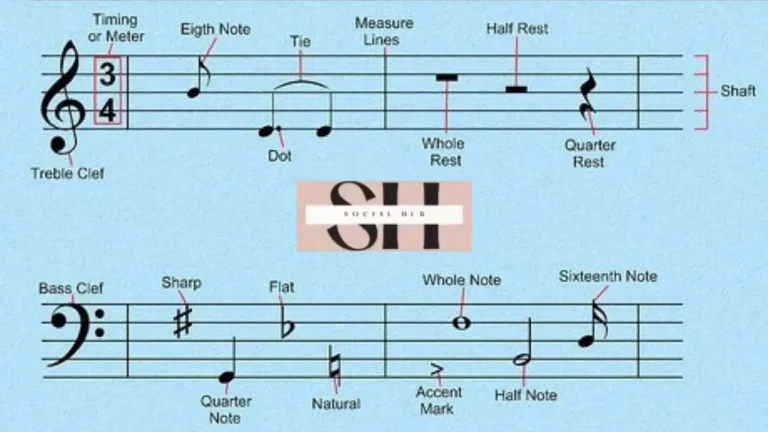
Musicians write these notes on a staff with five lines and four spaces. Each position on the staff represents a different pitch. Because of this system, people around the world can read and perform the same music.
Basic Idea Behind Musical Notation
Musical notation is a system that shows how music should sound. In simple words, it is the written language of music. Through notes in music, composers share their ideas with singers and instrumental players.
Each note shows two main things: how high or low the sound is and how long it lasts. When musicians read music, they follow these notes carefully. As a result, they can recreate the exact melody the composer imagined.
Seven Main Notes
Music uses seven basic sound names in the standard scale. These notes repeat again and again across higher or lower pitches. Learning these basic names helps beginners understand the structure of music.
| Musical Letter | Solfege Name | Description |
|---|---|---|
| C | Do | Starting point of many scales |
| D | Re | Second note in the scale |
| E | Mi | Third note with a bright tone |
| F | Fa | The fourth note is used in many melodies |
| G | Sol | Important note for harmony |
| A | La | Common note in songs |
| B | Ti | Leads back to C |
These seven notes create the foundation for almost every melody. Because of this pattern, musicians can form endless combinations of sounds.
Staff Helps Organize Musical Notes
The staff organizes notes so musicians can read them easily. It consists of five horizontal lines and four spaces. Each line and space represents a specific pitch.
When composers place notes in music on different lines, they change the pitch. Higher notes appear higher on the staff, while lower notes appear lower. This visual structure helps musicians quickly recognize the sound they must play.
Duration of Musical Notes
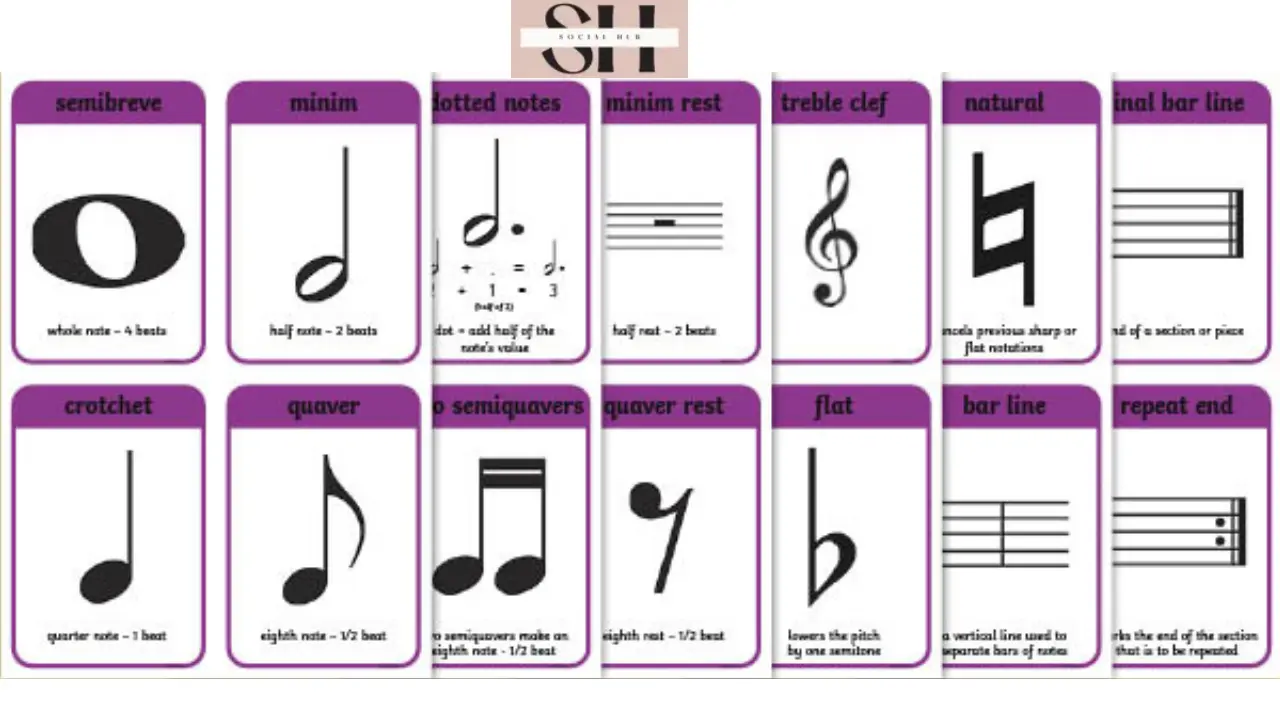
Besides pitch, notes also show how long a sound lasts. Musicians call this the duration of a note. Different shapes represent different time values in music.
| Note Type | Symbol Description | Beats in 4/4 Time |
|---|---|---|
| Whole Note | Open circle without stem | 4 beats |
| Half Note | Open circle with stem | 2 beats |
| Quarter Note | Filled circle with stem | 1 beat |
| Eighth Note | Filled circle with one flag | 1/2 beat |
| Sixteenth Note | Filled circle with two flags | 1/4 beat |
Role of Clefs in Reading Music
Clefs appear at the beginning of the staff and guide the reader. They show which notes belong to which pitches. Without clefs, the staff would not clearly represent sound.
The two most common clefs are the treble clef and the bass clef. Treble clef works well for high sounds such as the violin or the flute. Bass clef suits low sounds played by instruments like the cello or bass guitar.
Rhythm and Melody
Music becomes exciting when rhythm and melody work together. Rhythm controls the timing of sounds. Melody creates the pattern of pitches that people remember.
When composers arrange notes in music, they create unique musical ideas. Some notes move slowly and smoothly, while others move quickly. This variation makes songs interesting and emotional.
How Beginners Can Learn Musical Notes
Learning music does not need to feel difficult or confusing. Beginners should start by memorizing the seven basic notes. After that, they can practice reading simple rhythms.
Teachers often encourage students to repeat melodies. This repetition helps learners recognize notes in music more quickly. Gradually, reading music becomes natural and enjoyable.
Why Musical Notes Are Important for Musicians
Musicians rely on notation to communicate their ideas clearly. Written music allows performers to share songs across cultures and generations. This system makes music education easier for students worldwide.
Because of written notation, orchestras can perform complex compositions together. Each musician reads their part and follows the same rhythm. In this way, notes in music create harmony between many instruments.
Evolution Over Time
Music notation has changed greatly throughout history. Early musicians used simple marks to remember melodies. Later, composers developed more detailed systems for rhythm and pitch.
Today, modern software allows musicians to write and edit notes in music digitally. These tools help composers share their work quickly with performers. As technology improves, the future of musical notation will continue to evolve.
Frequently Asked Questions
What are notes in music?
These Notes are symbols that show the pitch and duration of a sound. Musicians read these symbols to play or sing melodies correctly.
How many basic notes are there in music?
There are seven basic notes in Western music: C, D, E, F, G, A, and B. These notes repeat in higher or lower pitches.
Why are musical notes important?
These Notes help musicians read, write, and share songs. They make it possible for performers around the world to play the same piece.
Where are notes written in music?
Musicians write these notes on a staff with five lines and four spaces. The position of the note shows how high or low the sound is.
Final Thoughts
Music becomes easier to understand once you learn the basics of notation. The system of notes in music explains both pitch and rhythm in a clear way. Because of this system, musicians can perform the same piece anywhere in the world.
Learning musical notes opens the door to creativity and expression. With practice and patience, anyone can read and enjoy written music. Eventually, these notes transform simple sounds into beautiful melodies.