Music uses symbols to show sound, and these symbols help musicians play songs with correct timing and rhythm.
When you learn the types of music notes, you understand how long to hold each sound and how music flows.
Understanding the notes builds a strong base for reading music and playing any instrument.
So, let us explore each note clearly and simply.
What Are Music Notes?
Music notes are symbols that show both pitch and duration in written music.
They tell you how long to play a sound and when to stop or pause.
When you study the types of music notes, you learn how rhythm works in songs.
This knowledge helps you play music smoothly and with confidence.
Why Learning Music Notes Is Important
Learning music notes helps you read and understand songs easily.
It also improves your timing and makes your playing sound better.
The types of music notes give structure to music and guide every musician.
Without them, music would sound messy and unclear.
Violin Notes Chart Simple Guide for Beginners
Whole Note and Its Role
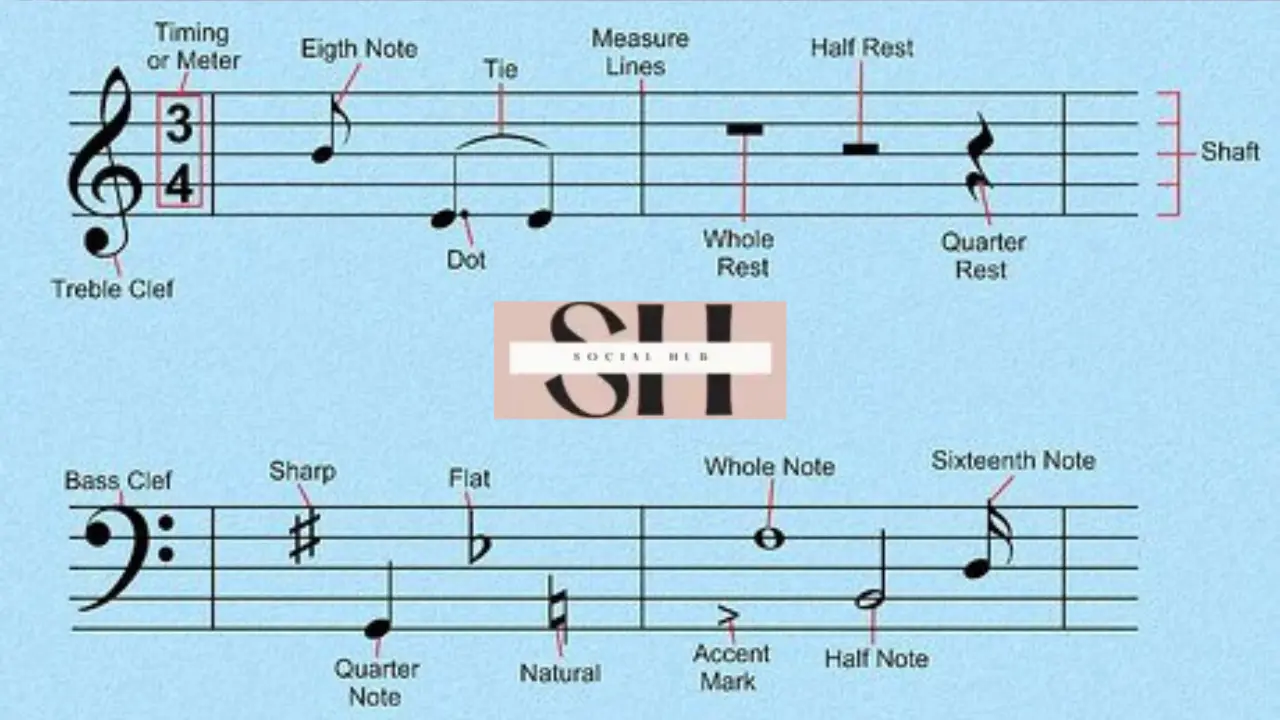
A whole note is the longest common note in music.
It lasts for four beats in most songs with 4/4 timing.
This note looks like a hollow oval and has no stem.
Among the types of music notes, it gives a slow and steady feel.
Half Note and Its Use
A half note lasts for two beats, which is half the length of a whole note.
It looks like a hollow oval with a stem attached.
Musicians use it to create balance in rhythm.
In the types of music notes, it helps connect long and short sounds.
Quarter Note in Everyday Music
A quarter note is one of the most common notes used in music.
It lasts for one beat and has a filled oval with a stem.
You will often hear it in songs because it sets the main rhythm.
The types of music notes rely heavily on this note for timing.
Eighth and Sixteenth Notes
Eighth notes last for half a beat, while sixteenth notes last for one-fourth of a beat.
Both notes have flags or beams that show faster timing.
These notes create quick and lively rhythms in music.
In the types of music notes, they add energy and movement.
Dotted Notes and Their Meaning
A dotted note increases the value of a note by half of its original length.
For example, a dotted half note lasts for three beats.
This simple change creates variation in rhythm.
The types of music notes become more flexible with dotted notes.
Twinkle Twinkle Little Star Notes Simple Guide for Beginners
Rests in Music Notes
Rests show silence in music, and they are just as important as sound.
Each rest matches a note value, like a whole rest or quarter rest.
Musicians use rests to create pauses and rhythm patterns.
The types of music notes include rests to balance sound and silence.
Common Music Notes
| Note Name | Symbol Description | Beats (4/4 Time) | Function in Music |
|---|---|---|---|
| Whole Note | Hollow oval | 4 | Long, steady sound |
| Half Note | Hollow oval + stem | 2 | Medium duration |
| Quarter Note | Filled oval + stem | 1 | Basic rhythm unit |
| Eighth Note | 1 flag or beam | 1/2 | Faster rhythm |
| Sixteenth Note | 2 flags or beams | 1/4 | Very fast notes |
| Dotted Note | Note with a dot | + half value | Extended duration |
| Rest | Special symbol | Varies | Silence in music |
This table helps you compare the types of music notes quickly and clearly.
It also shows how each note plays a role in rhythm.
How to Practice Music Notes
Start by clapping the rhythm of each note to understand timing better.
Then, try playing them on a simple instrument like a keyboard.
Practice slowly and increase your speed step by step.
Learning the types of music notes becomes easy with regular practice.
Conclusion
Music becomes easy when you understand how notes work together.
Each note has a role, and together they create beautiful melodies.
When you master the types of music notes, you unlock the ability to read and play music confidently.
So, keep practicing and enjoy the journey of learning music.