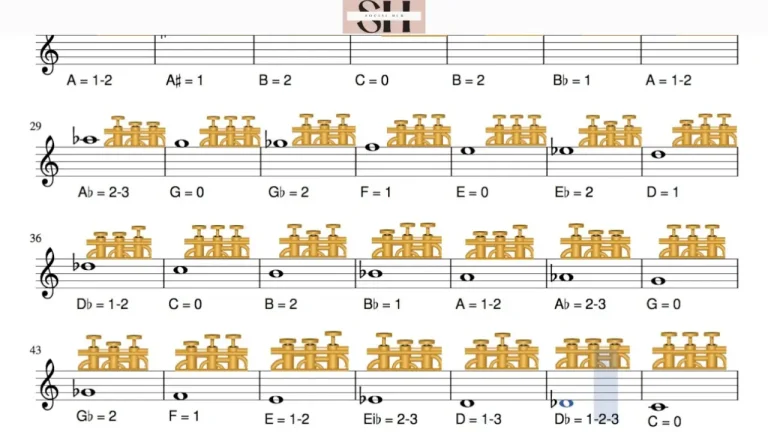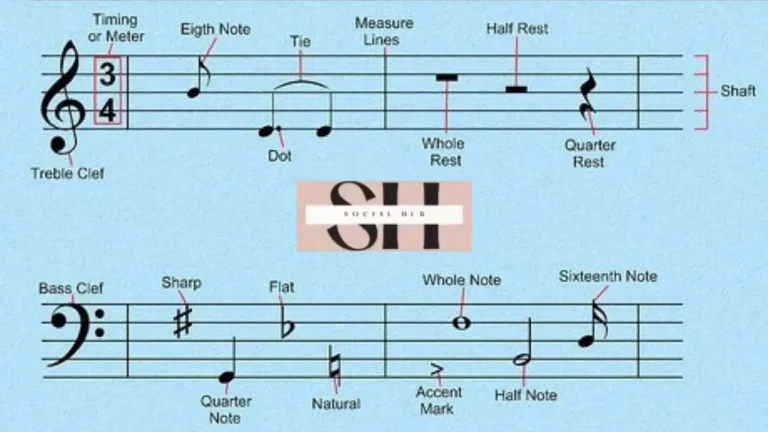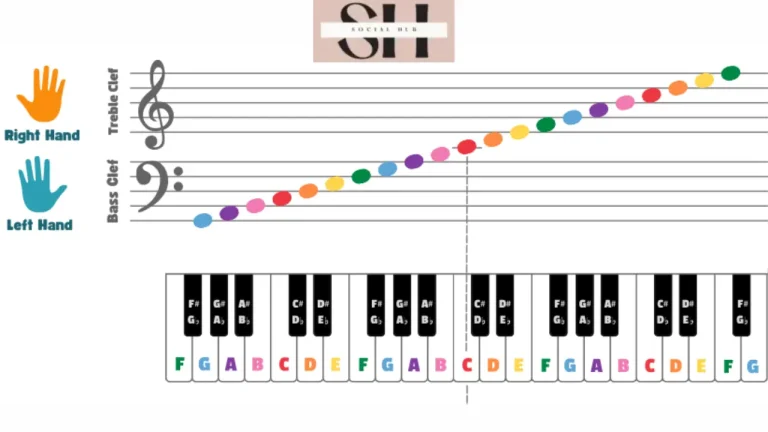
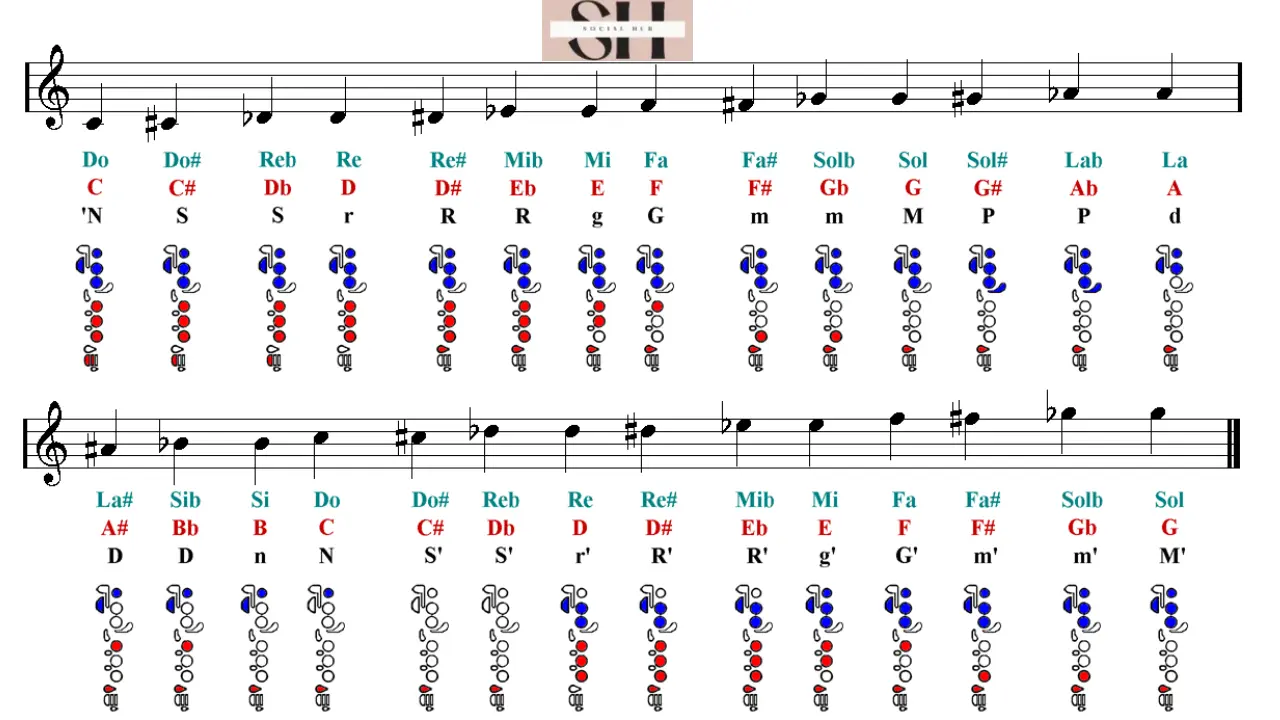
A flute notes chart helps players learn finger placement and note reading easily. It shows how each note connects to specific keys on the flute clearly. Beginners often use this chart to understand music basics quickly and with less confusion. Therefore, it becomes a strong foundation for learning the flute step by step.
Why a Flute Notes Chart Is Important
A flute notes chart makes learning faster because it shows visual guidance for each note clearly. It helps players avoid mistakes and builds confidence during early practice sessions. Moreover, it improves memory by linking finger positions with musical sounds effectively. As a result, learners progress smoothly without feeling overwhelmed or lost.
Basic Flute Structure
The flute has three main parts, and each part plays a key role in sound production. The headjoint controls airflow, while the body contains most of the keys used daily. The footjoint helps produce lower notes and balances the instrument during playing. Therefore, knowing the structure supports better use of a flute notes chart.
Cornell Notes Template Google Docs Better Study Notes Guide
How to Read a Flute Notes Chart
Reading a chart becomes easy when you follow simple patterns and symbols. Filled circles usually mean you press a key, while empty circles mean you leave it open. Additionally, charts often group notes into low, middle, and high ranges for clarity. This method helps beginners understand finger placement quickly and correctly.
Low Notes
Low notes appear at the bottom of the chart, and they use more closed keys. These notes require slower air and relaxed breathing for a warm and deep tone. Beginners often start with these notes because they feel easier to control and produce. As practice improves, players gain better sound stability and control.
Middle Notes
Middle notes sit in the center of the flute notes chart, and they are the most commonly used. These notes require balanced air pressure and steady finger movement for smooth transitions. Many simple songs use these notes, so beginners practice them often during early lessons. Consequently, players build confidence and improve rhythm naturally.
High Notes
High notes appear at the top of thechart, and they need faster air speed. These notes require tighter lips and precise control to avoid sharp or weak sounds. Although they seem difficult at first, practice helps improve clarity and tone quality over time. Therefore, patience plays a key role in mastering high notes.
Common Notes and Finger Positions Table
| Note | Left Hand (LH) | Right Hand (RH) | Difficulty Level |
|---|---|---|---|
| C | ● ● ● | ● ● ● | Easy |
| D | ● ● ● | ● ● ○ | Easy |
| E | ● ● ● | ● ○ ○ | Easy |
| F | ● ● ● | ○ ○ ○ | Easy |
| G | ● ● ○ | ○ ○ ○ | Easy |
| A | ● ○ ○ | ○ ○ ○ | Medium |
| B | ○ ● ○ | ○ ○ ○ | Medium |
| High C | ○ ○ ○ | ○ ○ ○ | Hard |
This table supports the flute notes chart by showing clear finger placement for each note. It helps beginners quickly match notes with finger positions during practice sessions.
Notes on Guitar Simple Guide for Beginners 2026
Tips to Practice
Using a chart daily improves learning speed and builds strong playing habits. Start with simple notes and move gradually to more complex ones for better understanding. Also, practice slowly to maintain accuracy and avoid forming bad habits early. In addition, regular practice builds muscle memory and improves overall performance.
Common Mistakes
Many beginners press keys too hard, which can slow finger movement and affect sound quality. Some learners also ignore proper breathing, which leads to weak or unclear notes. Additionally, skipping basic practice can make it harder to follow the chart later. Therefore, focusing on the basics helps avoid these common issues.
Benefits of Mastering
Mastering the flute notes chart allows players to read music faster and play with confidence. It improves coordination between fingers and breathing, which enhances sound quality. Furthermore, it opens the door to learning advanced songs and techniques more easily. As a result, players enjoy music more and stay motivated to improve.
Frequently Asked Questions
What is a flute notes chart?
This chart shows finger positions for each note on the flute in a simple visual way.
Why should beginners use a chart?
Beginners use a chart to learn correct finger placement and avoid common mistakes early.
Are these charts the same for all flutes?
Most of these chart guides are similar, but slight differences may exist between flute types.
How often should I practice with a chart?
You should practice daily with a chart to improve accuracy and build strong muscle memory.
A flute notes chart serves as a powerful learning tool for beginners and growing musicians. It simplifies complex finger placements and helps players understand musical notes clearly. With regular practice and patience, anyone can learn to play the flute effectively. Therefore, using this chart daily leads to steady progress and musical success.