
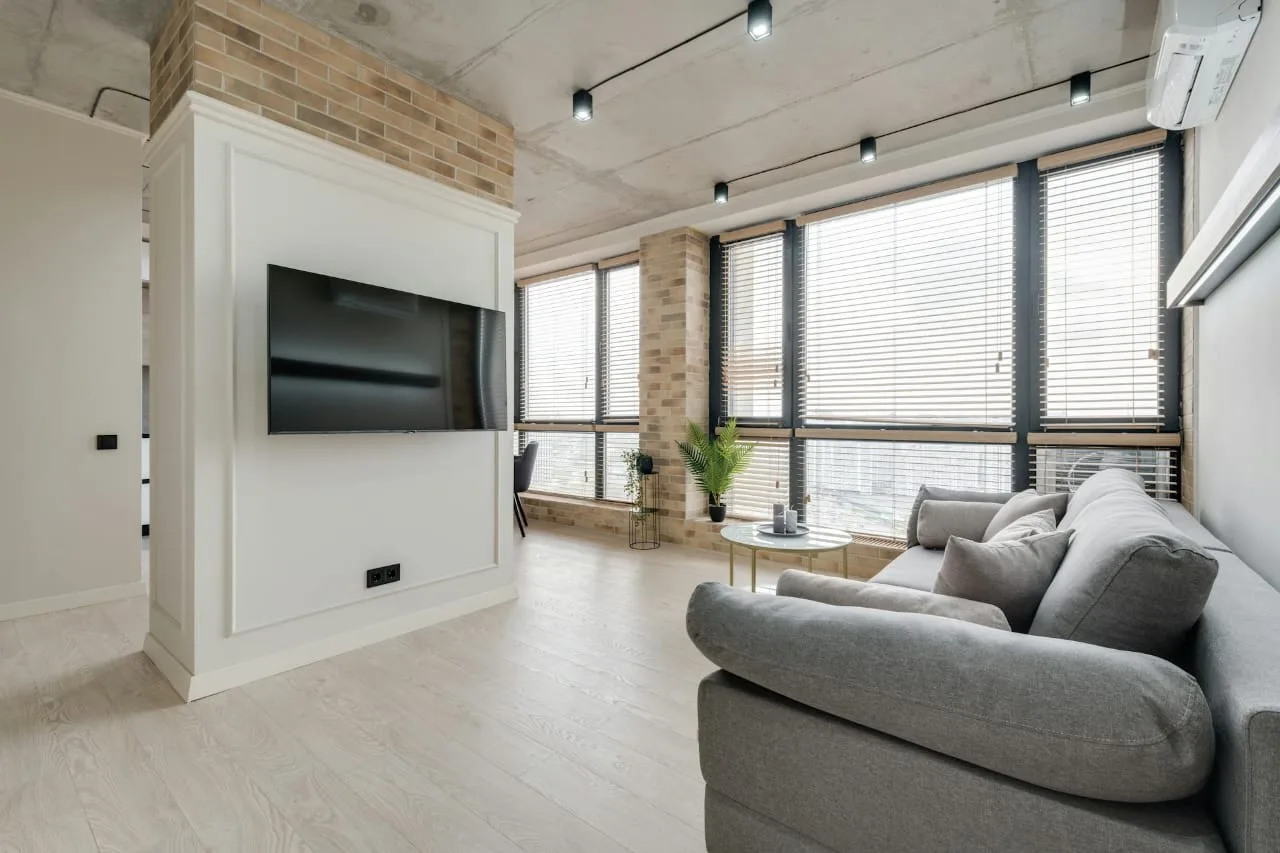
Natural light can bring you a long list of benefits. It’s a fantastic way to get your daily dose of vitamin D, and studies indicate that it can reduce people’s stress levels. It’s said to boost creativity, productivity, and energy levels, and it can help prevent depression. Getting plenty of natural light during the day can even help you sleep better at night.
Of course, having too much natural light coming into your home also has a few downsides. At certain times of the day, it may make watching television or seeing your computer screen a bit difficult. It can also heat up your home, which may cause your air conditioning system work harder during the summer. UV radiation from the sun can fade your furniture and rugs and damage your hard floors as well.
Finding a Balance
Fortunately, you don’t have to sacrifice the benefits of natural sunlight to avoid its disadvantages. Window treatments, like blinds, shades, and interior shutters, can give you the best of both worlds. Instead of blocking sunlight or allowing it to come inside all the time, they give you the flexibility to choose how much sun exposure you get indoors. It’s all about finding the right balance.
Mitigating Light with Blinds
Blinds are the most versatile window coverings for mitigating light. Their slats can tilt, which allows you to adjust them as needed throughout the day. You can also raise them if you’d like full sunlight. Additionally, while you’re adjusting the amount of light they let into your home, you can adjust the amount of privacy they provide based on your needs.
also read: What Is Local Digital Marketing, and Why Your Business Needs It
Managing Incoming Light with Shades
Shades give rooms a softer look than blinds. They’re available in an array of thicknesses as well. You can choose sheer shades in rooms that don’t get a great deal of sun exposure. On the other hand, you can choose thicker shades for rooms that tend to get too much natural light. You can also raise or lower them to allow in the amount light you want. Beyond that, thicker shades can provide added privacy and heat control.
Moderating Natural Light with Shutters
Then, there are shutters. Since they’re affixed to your window frames, they’re permanent components of your home. Some feature adjustable slats much like blinds, so they allow you to control the amount of natural light that comes inside. You can even fully open their hinged doors to flood your home with sunlight or close them to block it completely. Shutters can often provide more heat control than shades or blinds, and they tend to last longer.
Choosing the Best Option for Your Home
Blinds, shades, and shutters can all help you find balance when it comes to the amount of natural light that comes into your home. In doing so, they also offer a certain amount of control over your privacy, indoor temperatures, and energy efficiency. While blinds are the most versatile, shades and shutters are excellent choices as well. Overall, deciding which one is best for your home is largely a matter of style and preference combined with your unique light control needs.