
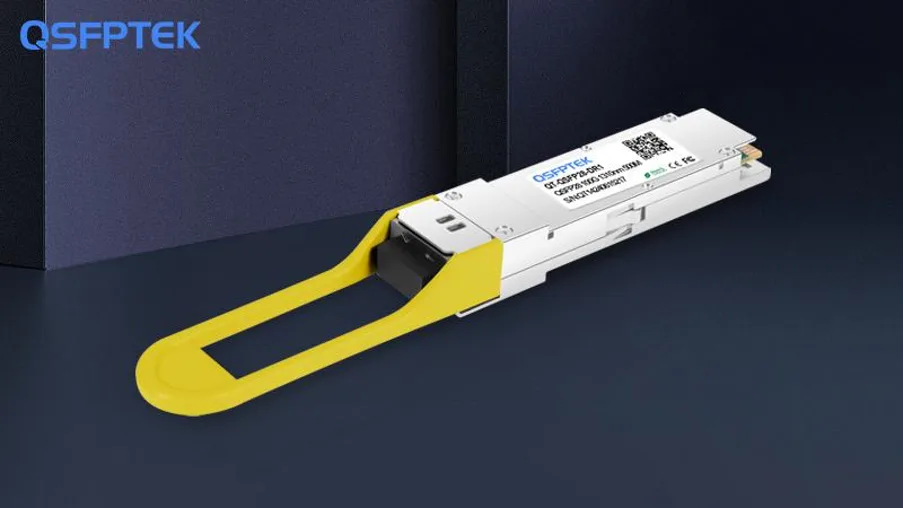
High-frequency trading (HFT) has revolutionized the financial industry, where algorithms and automated systems execute thousands of trades in a fraction of a second. In this fast-paced environment, the ability to transmit data quickly and efficiently is crucial to gaining a competitive edge. As the need for even faster and more reliable systems grows, 100G modules have emerged as a key enabler of low-latency, high-throughput data transmission in high-frequency trading. This blog post explores how 100G modules help HFT systems by offering the necessary performance to reduce latency and increase throughput.
The Need for Speed in High-Frequency Trading
At the heart of high-frequency trading lies the requirement for ultra-low latency. Every millisecond—or even microsecond—can make a significant difference in the profitability of a trade. HFT algorithms rely on speed, executing orders based on real-time market conditions, often in fractions of a second. In this highly competitive environment, even the smallest delay can result in missed opportunities or a financial loss.
The role of data transmission becomes pivotal here. To maintain the speed of these algorithms, the infrastructure supporting HFT systems must be able to handle massive data flows with minimal delays. This is where 100G modules play an essential role.
How 100G Modules Address Latency in HFT
100G transceivers offer a significant upgrade over their predecessors (such as 10G or 40G modules) by providing up to 100 gigabits per second (Gbps) of bandwidth. This increased bandwidth is vital for high-frequency trading, where rapid data transfer and real-time decision-making are crucial.
One of the key advantages of 100G modules is their ability to handle larger volumes of data while maintaining extremely low latency. By supporting high-speed, low-latency connections between servers, switches, and trading platforms, 100G modules ensure that data packets are transmitted as quickly as possible, reducing the time it takes for HFT algorithms to react to market conditions. This helps financial institutions achieve faster order execution, which is essential in HFT environments where milliseconds matter.
Increasing Throughput for Market Data
In addition to low latency, throughput is another critical factor in high-frequency trading. With HFT, the need to process vast amounts of market data quickly and efficiently is paramount. 100G modules help by providing the bandwidth necessary to handle these large data volumes.
Market data feeds consist of continuous streams of information, including price updates, order books, and trade executions. These feeds must be processed in real time to enable HFT systems to make accurate decisions. 100G modules allow for faster data delivery across the network, which means that trading algorithms can process more data in less time, resulting in better execution speed and overall performance.
By supporting higher throughput, 100G modules also help trading systems scale more efficiently. As markets grow and the volume of data increases, HFT systems need a network infrastructure capable of supporting this growth. 100G modules ensure that the system remains capable of handling large volumes of data without compromising performance or introducing delays.
Improving Competitive Advantage
In the world of high-frequency trading, latency is a significant factor in determining who gets the best prices and who misses out. By upgrading to 100G modules, financial institutions can gain a critical advantage by improving their ability to respond to market changes faster than their competitors.
Firms with faster, more reliable networks can react to price changes in real time, execute trades more quickly, and ultimately generate more profit. In HFT, a competitive advantage comes down to milliseconds, and having the right network infrastructure can make all the difference.
Conclusion
100G modules are indispensable in the world of high-frequency trading, where speed and reliability are paramount. By providing ultra-low latency and high throughput, these modules allow trading systems to handle vast amounts of data and respond to market conditions in real time. As financial markets become more complex and competitive, the role of 100G modules will continue to grow, helping firms maintain a technological edge and maximize their trading performance. With faster and more efficient data transmission, 100G modules play a crucial role in ensuring that high-frequency trading remains at the cutting edge of the financial industry.