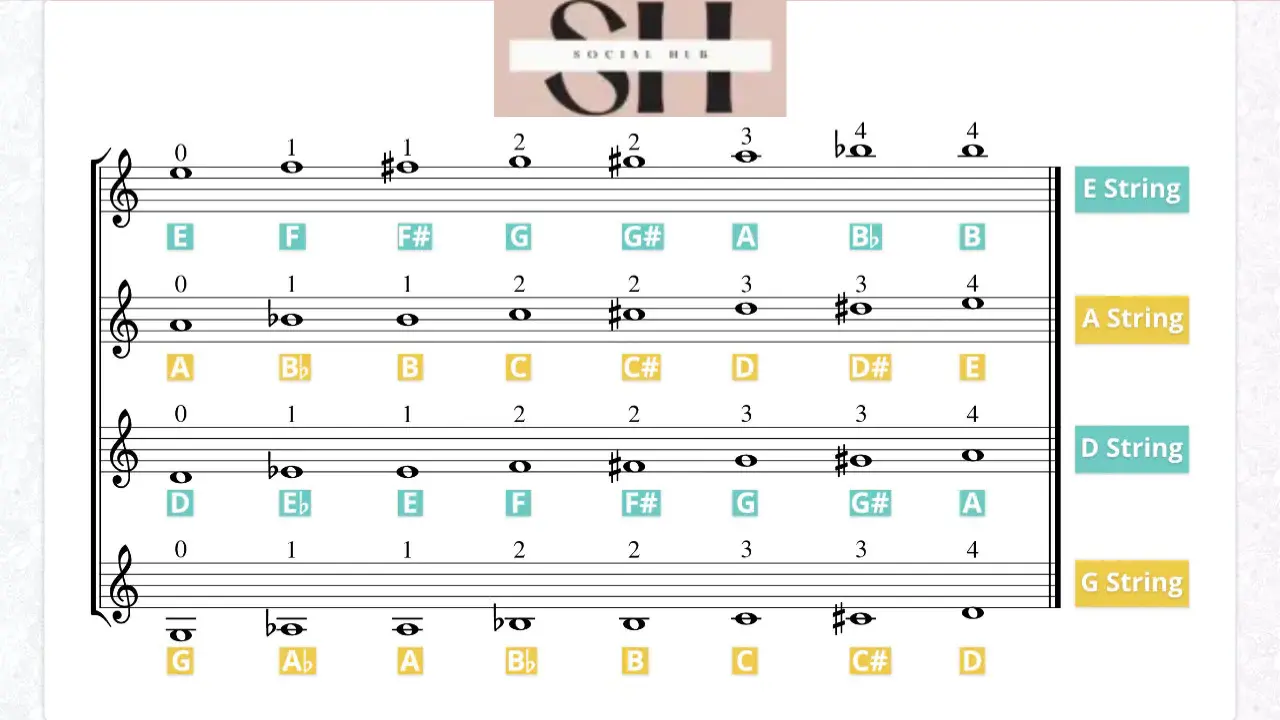
A violin notes chart helps you understand where each note sits on the violin fingerboard. It shows strings, fingers, and pitch clearly for beginners. Many students use this notes chart to learn faster and avoid confusion early on.
This chart connects finger placement with sound, so you know what note you are playing. It also helps you build muscle memory step by step. As a result, you improve accuracy and confidence while practicing daily.
Why Beginners Need a Violin Notes Chart
A beginner often struggles to find the correct notes without guidance. Therefore, a violin notes chart becomes a helpful visual tool. It guides your fingers and shows how notes change across strings.
In addition, it reduces guesswork and saves practice time. You learn correct positions early, which prevents bad habits later. This makes your learning process smoother and more enjoyable.
Twinkle Twinkle Little Star Notes Simple Guide for BeginnersViolin Strings
The violin has four strings, and each string plays different notes. These strings follow a fixed order from low to high pitch. A violin notes chart always starts with these open strings.
| String Number | String Name | Pitch Level |
|---|---|---|
| 4th | G | Lowest |
| 3rd | D | Low |
| 2nd | A | Medium |
| 1st | E | Highest |
These strings form the base of all notes you will learn. Once you know them well, reading any of these notes chart becomes easier.
Finger Placement
Each finger creates a different note when placed on a string. The first finger plays a higher note than the open string. The violin notes chart shows exact finger positions clearly.
The second and third fingers can move slightly to change pitch. This creates low and high variations of notes. Therefore, careful finger placement becomes very important for good sound.
Notes on the G String
The G string produces deep and warm sounds. It sits at the lowest pitch on the violin. The notes chart shows how fingers move step by step on this string.
| Finger | Note |
|---|---|
| Open | G |
| 1st | A |
| Low 2nd | B♭ |
| High 2nd | B |
| 3rd | C |
| 4th | D |
Practicing these notes helps build strong finger control. It also improves your understanding of pitch differences.
Notes Template Simple Guide to Organize Your Ideas Better
Notes on the D String
The D string sits above the G string and sounds brighter. It is often used in simple melodies. The notes chart explains how notes shift smoothly on this string.
| Finger | Note |
|---|---|
| Open | D |
| 1st | E |
| Low 2nd | F |
| High 2nd | F♯ |
| 3rd | G |
| 4th | A |
These notes appear in many beginner songs. So learning them early helps you play music quickly.
Notes on the A String
The A string produces clear and strong tones. Many beginner songs use this string often. A violin notes chart makes it easy to remember finger positions here.
| Finger | Note |
|---|---|
| Open | A |
| 1st | B |
| Low 2nd | C |
| High 2nd | C♯ |
| 3rd | D |
| 4th | E |
Because this string is easy to hear, students enjoy practicing it. It also helps improve tuning skills.
Notes on the E String
The E string is the highest and brightest string. It produces sharp and clear sounds. This notes chart shows how to control pitch carefully on this string.
| Finger | Note |
|---|---|
| Open | E |
| 1st | F |
| Low 2nd | G |
| High 2nd | G♯ |
| 3rd | A |
| 4th | B |
Since the pitch is high, small mistakes become noticeable. Therefore, careful practice is very important.
How to Read a Violin Notes Chart
Reading a chart becomes easy once you understand strings and fingers. You follow the string first, then place your finger as shown. The notes chart works like a map for your playing.
It also connects with sheet music, so you know where notes come from. Over time, you will not need the chart as much. However, it remains useful for learning new positions.
Tips to Practice
Practice slowly and focus on correct finger placement every time. Use your ear to check if the note sounds right. A violin notes chart helps you stay accurate during practice.
Repeat notes daily to build strong muscle memory. Also, use a tuner if needed to stay in tune. With time, your fingers will move naturally without thinking.
Common Mistakes to Avoid
Many beginners press too hard or place fingers in the wrong spot. This leads to poor sound quality and frustration. Thisnotes chart helps you avoid these mistakes early.
Another common issue is rushing through practice. Instead, take your time and focus on accuracy. This will improve your playing faster than speed alone.
Frequently Asked Questions
What is a violin notes chart used for?
This notes chart helps beginners find the correct finger positions and notes on each string easily.
How can I memorize this notes chart quickly?
You can memorize it by daily practice and repeating notes slowly while checking finger placement carefully.
Do I need this notes chart after learning the basics?
You may not need it later, but it still helps when learning new notes or advanced positions.
Is this chart helpful for self-learning?
Yes, it supports self-learning by guiding finger placement and improving note accuracy without a teacher.
Final Thoughts
Learning the violin takes patience, but the right tools make it easier. A violin notes chart gives you a strong foundation from the start. It helps you understand notes, strings, and finger placement clearly.
As you practice more, you will rely less on the chart. However, it will always remain a useful guide. Keep practicing daily, and your skills will grow steadily.