
The violin is a highly expressive string instrument. Players must master four individual strings to play properly. The lowest of these four is the G string.
Learning these specific pitches provides a strong musical foundation. This string creates the deepest sounds on the instrument. It requires specific physical techniques to play clearly.
This guide explains the correct finger placements and bowing techniques. You will also learn how to read these specific pitches on standard sheet music.
Understanding The Instrument Layout
Identifying The Lowest String
The G string sits on the far left side of the fingerboard. This is the perspective from the player holding the instrument. It is the thickest string on a standard violin.
In standard tuning, musicians tune this string to G3. This specific pitch sits directly below middle C on a piano keyboard. The approximate frequency of this open string is 196 Hz.
Physical Composition And Materials
Manufacturers build this string differently because of its low pitch. They typically use a synthetic or steel core. They wrap this core tightly in heavy metal wire.
Silver and tungsten are the most common wrapping materials. This added mass lowers the vibration frequency. It allows the string to remain thin enough for comfortable finger placement.
First Position Finger Placements
The Natural Notes
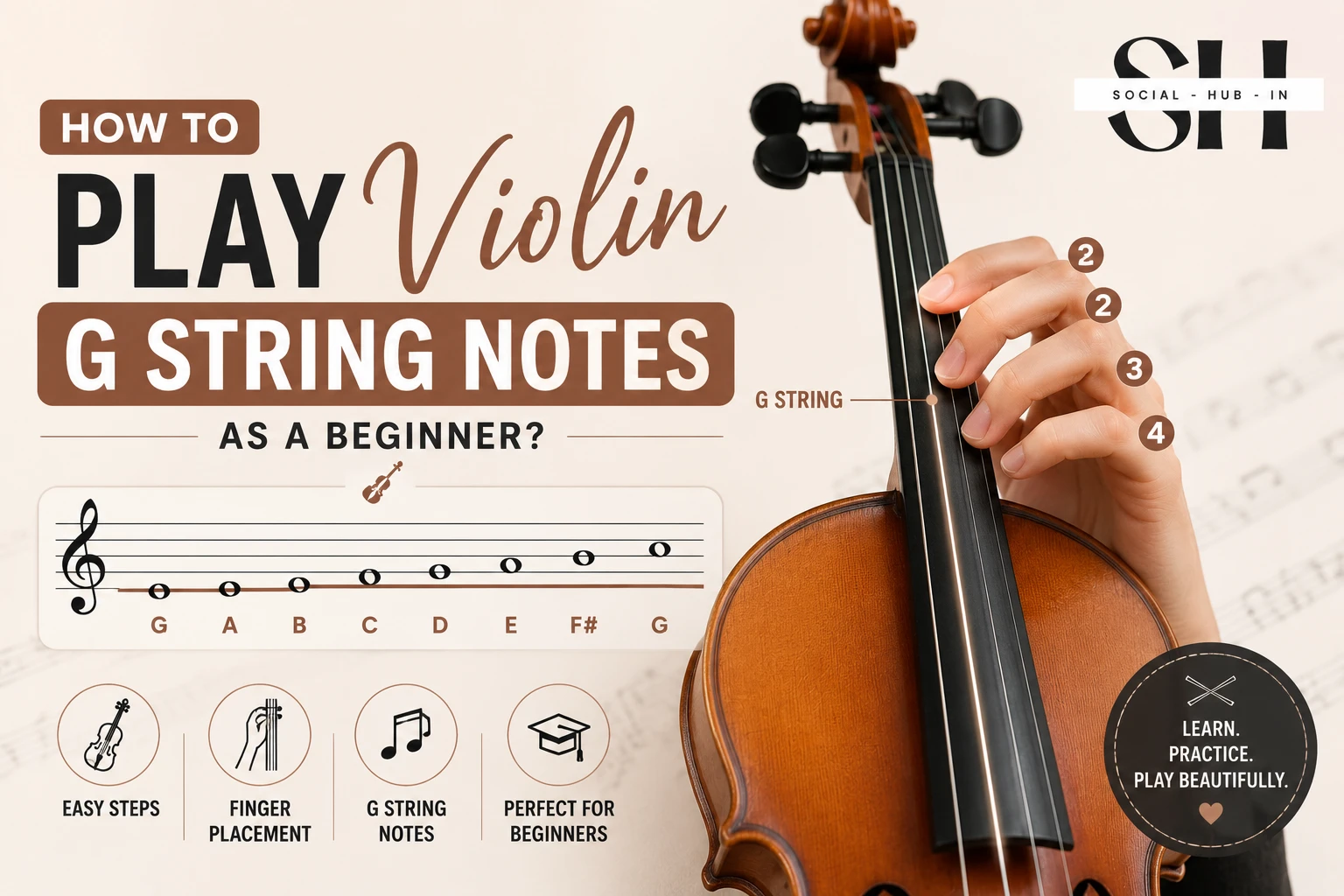
Beginners always start by learning first position. This foundational hand placement covers the most common pitches. Playing the open string requires zero fingers on the fingerboard.
You place your first finger down to play an A3. This requires a whole step distance from the top nut. Your second finger plays a B3.
This sits a whole step away from your first finger. Your third finger plays a C4, also known as middle C. This finger sits directly next to the second finger as a half step.
Your fourth finger plays a D4. This sits a whole step away from the third finger. This exact pitch matches the open D string perfectly.
Playing Sharps And Flats
You will eventually need to play accidentals. These are the sharp and flat notes outside the basic scale. You access these by adjusting your finger placement slightly.
A low first finger produces a G sharp or A flat. A low second finger creates a B flat or A sharp. A high third finger gives you a C sharp or D flat.
A high fourth finger produces a D sharp or E flat. Learning these half steps takes careful listening and consistent practice.
Reading The Sheet Music
The Treble Clef And Ledger Lines
Violin music is written entirely in the treble clef. This clef typically represents higher musical voices. The lowest pitches sit below the standard five staff lines.
Composers must use ledger lines to write these low notes. Ledger lines are small horizontal lines added below the main staff. Reading them quickly requires visual practice.
Plotting The Specific Pitches
The open G3 sits in the space below the second ledger line. The A3 sits directly on that second ledger line. The B3 sits in the space below the first ledger line.
The C4 sits directly on the first ledger line. Memorizing these visual positions speeds up your sight reading. You must instantly connect the written mark to your physical finger placement.
Bowing Techniques And Tone Production
Managing Bow Weight And Speed
This thick string requires a specific bowing approach. You must apply more bow weight to make it speak clearly. The physical pressure forces the heavy metal to vibrate.
You must also use a slightly slower bow speed. Moving the bow too fast produces a weak, scratching sound.
- Apply strong downward pressure with your index finger.
- Draw the bow slowly across the contact point.
- Keep your wrist completely relaxed during the stroke.
- Maintain a straight bowing angle at all times.
Exploiting The Dark Tone
This string is famous for its dark, rich, and heavy tone. It sounds much thicker than the bright E string. Composers specifically use this deep sound for emotional musical passages.
Players sometimes shift into third or fourth position on this string. This allows them to play higher notes with a dark tone. They choose this over switching to a higher, thinner string.
Practical Musical Applications

Playing Famous Repertoire
Many famous classical pieces highlight this specific sound. The most famous example is Air on the G String. Johann Sebastian Bach originally composed this piece for an orchestra.
August Wilhelmj later rearranged it for a solo violinist. He instructed the player to perform the entire melody on the lowest string. This uses the deeply expressive and heavy tonal qualities of the instrument.
Setting The Right Mood
Different events require completely different musical approaches. A working musician might get hired for a solemn memorial service. They must play very respectfully during these quiet moments.
Their music matches the somber mood of the room. It complements the quiet funeral notes for flowers placed around the casket. The deep tone of the lowest string fits this atmosphere perfectly.
Professional Acknowledgment And Theory
Families appreciate musicians who handle these events with care. A hired violinist might even receive thank you notes after funeral to friends for their supportive performance. Professionalism always matters in the music business.
The theory behind these notes applies to other instruments too. The pitch frequencies remain exactly the same across different families. Someone reading mouth organ music notes uses the same exact musical math.
Frequently Asked Questions
What Pitch Is The Lowest String Tuned To?
It is tuned to G3 in standard tuning. This note sits directly below middle C on a piano keyboard. Its frequency is approximately 196 Hz.
Why Is This String So Thick?
It needs physical mass to produce a low frequency. Manufacturers wrap a synthetic or steel core in silver or tungsten. This lowers the pitch without making it impossible to play.
How Do I Read These Notes On Paper?
You must read the ledger lines below the standard treble clef. The open string sits in the space below the second ledger line.
Why Do Composers Ask Players To Stay On This String?
Composers want the specific dark and rich tone it produces. Shifting into higher positions on this string creates a heavy, emotional sound.
Final Takeaways
Mastering the lowest string takes dedicated practice. You must memorize the finger placements in first position to build your foundation. Reading the ledger lines below the treble clef is a mandatory skill.
Always pay attention to your right hand when playing these low pitches. Apply enough physical pressure to make the heavy metal wire vibrate properly. Keep your bow speed controlled to avoid unwanted scratching sounds.
Listen closely to your intonation when placing your fingers. Your third finger must sit directly next to your second finger. Consistent practice will help you unlock the warm, dark tone of this beautiful instrument.