
Meta Description: The bass guitar acts as the rhythmic and harmonic foundation of any band. Learning the exact layout of the fingerboard takes daily practice and patience. A standard instrument features four heavy strings tuned to specific low frequencies.
This guide explains how to locate every single pitch quickly. You will learn about standard tuning, alternate setups, and reading sheet music. We break down the exact mathematics required to play confidently.
What Are The Strings On A 4 String Bass?
Standard EADG Tuning Details
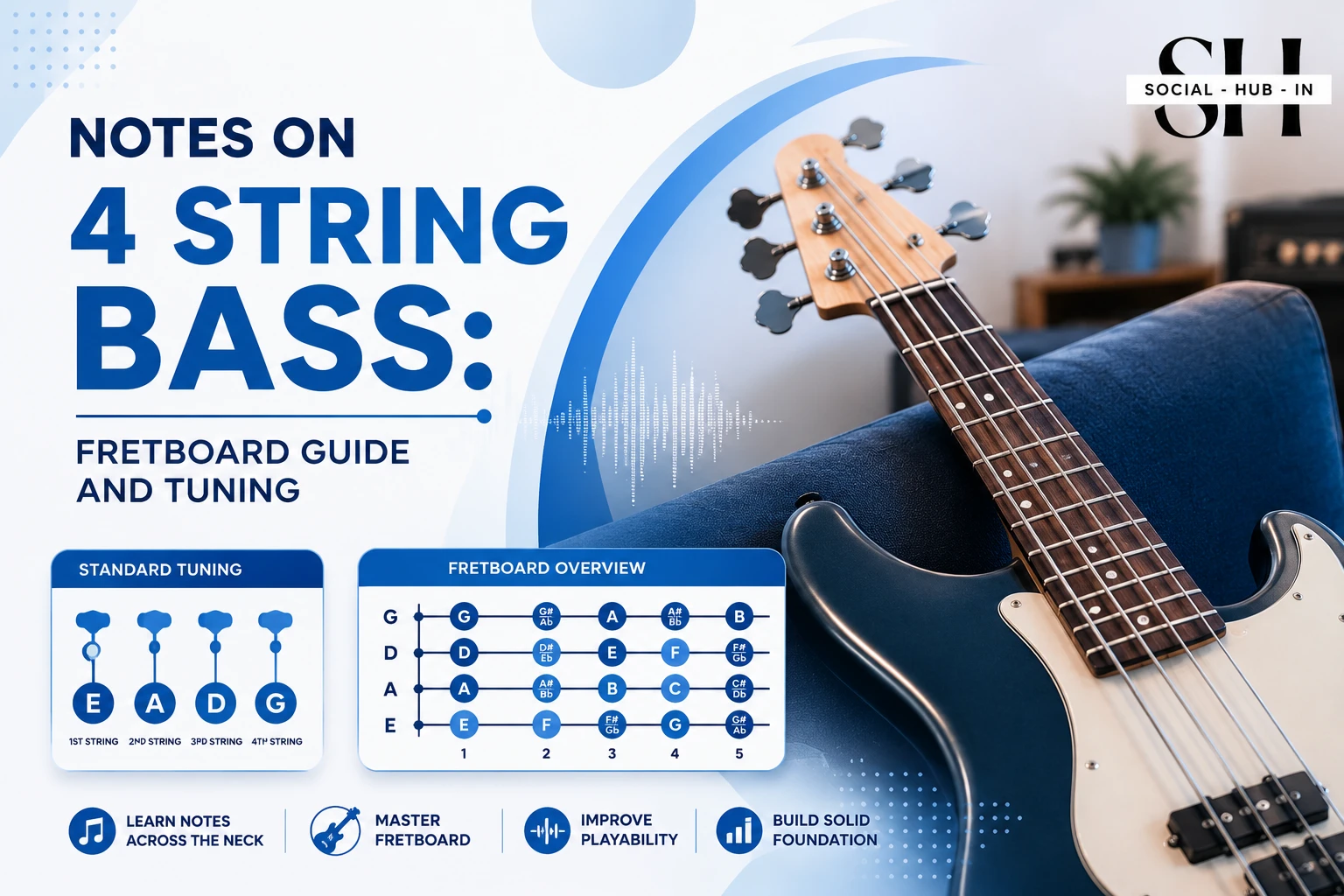
A standard bass uses the exact same notes as the bottom four strings of an electric guitar. The only difference is the pitch drops exactly one octave lower. You tune the strings from thickest to thinnest as E, A, D, and G.
This specific setup makes playing major and minor scale patterns highly predictable. The thickest string sits closest to your chin when you hold the instrument. The thinnest string sits closest to the floor.
Measuring Pitch And Frequencies
Music relies on exact scientific frequencies to create harmony. The thick fourth string produces an E1 tone at 41.20 hertz. The third string hits an A1 tone at 55.00 hertz.
The second string reaches D2 at 73.42 hertz. The highest first string rings at G2 at 98.00 hertz. These low frequencies require a dedicated bass amplifier to sound clear. A standard guitar amplifier will distort and break under this heavy pressure.
How To Read The Fretboard Layout
Understanding The Fourth Interval Rule
Manufacturers design this instrument using intervals of perfect fourths. This means the fifth fret of any string matches the open pitch of the next string perfectly.
You can test this rule easily by playing the fifth fret on the E string. This produces the exact same A pitch as the open A string directly below it. This mathematical rule applies across the entire neck.
Locating The Root Notes Easily
Memorizing the entire fretboard at once often overwhelms beginners. You should focus strictly on learning the notes on the bass guitar neck slowly. Start by finding all the natural letters on the lowest string first.
You can locate the sharp and flat accidentals later once you build visual memory. Map out the physical dots placed along the side of the wooden neck. These dots act as visual markers for the third, fifth, and seventh frets.
What Are The Notes On A Bass Guitar By String?
Playing The Low E String
The thickest string anchors most rock and pop songs in modern music. The open position plays an E. Pressing the first fret gives you an F. The third fret produces a G.
The fifth fret sounds an A. The seventh fret plays a B. The eighth fret creates a C. Learning this single string allows you to play hundreds of popular songs immediately.
Moving To The A String
The A string carries many driving bass lines in funk and soul music. The open string is an A. The second fret produces a B. The third fret gives you a C.
You reach a D by holding down the fifth fret. The seventh fret produces an E. Knowing these positions helps you transition smoothly across the neck.
Exploring The D String
You use the D string frequently when playing melodic walking bass lines. The open position plays a D. The second fret gives you an E. The third fret produces an F.
Pressing the fifth fret gives you a high G. Jazz players rely heavily on this string to outline complex chord progressions.
Reaching The High G String
The thinnest string allows for bright and melodic solo playing. The open string plays a G. The second fret gives you an A. The fourth fret produces a B.
The fifth fret reaches a high C. This string operates much lower than the notes on e string violin but serves a similar melodic purpose. Players use this string to cut through a dense band mix loudly.
What Is The Lowest Note On 4 String Bass?
Exploring The Standard Range
The open E string provides the deepest standard tone on this instrument. This 41.20 hertz frequency sits perfectly below the kick drum in a music mix. The overall range extends from this low E up to roughly 400 hertz on the highest frets.
Using Alternate Tunings For Deeper Sounds
Metal and hard rock musicians often want an even heavier sound. They use Drop D tuning by lowering the E string down a whole step to D. This drops the lowest frequency to 36.71 hertz.
Some heavy metal players tune the entire instrument down to Drop C for extreme heaviness. This requires thicker strings to prevent unwanted buzzing against the metal frets.
How To Play A 4 String Bass Guitar With Sheet Music
Reading The Bass Clef
Piano players use both the treble and bass clefs to read music. Bass players read entirely from the bass clef, also known as the F clef. The low open E sits directly on the first ledger line below the main staff.
The high open G sits on the top space of the staff. Reading traditional notation allows you to work in classical or jazz orchestras easily.
Comparing Other Instruments
Musical theory applies equally to every instrument in a band. The physical finger placements change, but the math remains exactly the same.
Reading notes on a harmonica c requires the same understanding of basic intervals and scales. The bass simply operates in a much lower frequency bracket than wind instruments.
Reading Bass Guitar Tabs
Many modern players prefer reading tabs over traditional sheet music. A tablature diagram features four horizontal lines representing the physical strings. The bottom line represents the thick E string.
The numbers placed on the lines tell you exactly which fret to press down. This visual system requires zero knowledge of standard music theory to use.
Practical Bass Practice Methods
Practicing Major And Minor Scales
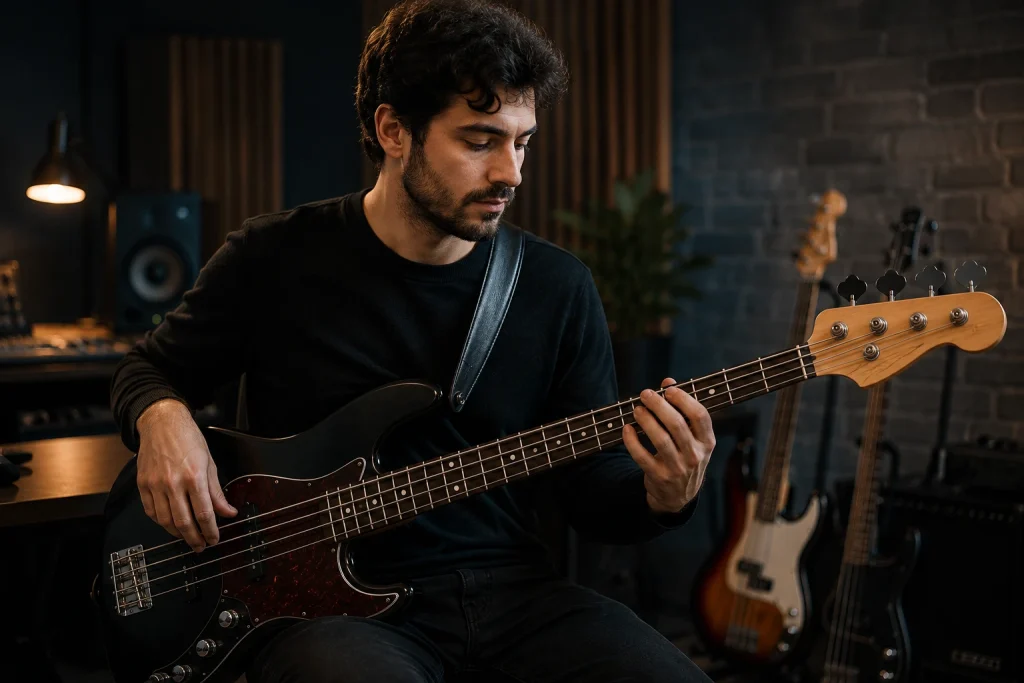
You build finger strength by running scales up and down the neck daily. The major scale provides a happy and resolved sound for pop songs. The minor scale creates a sad or intense feeling for rock music.
Start playing these patterns slowly with a metronome at sixty beats per minute. Speed will come naturally as your physical muscles develop over time.
Memorizing The Arpeggio Shapes
An arpeggio breaks a chord down into single individual pitches. Bassists play these shapes constantly to outline the harmony of a song. You can play a basic major arpeggio by hitting the root, third, and fifth intervals.
This pattern physically repeats exactly the same way anywhere on the neck. You never have to change your finger spacing when you switch keys.
Picking Techniques And String Tone
Using Traditional Fingerstyle Playing
How you attack the string changes the resulting pitch tone drastically. Traditional players pluck the strings using their index and middle fingers. This creates a very round, warm, and thumping sound.
Jazz, reggae, and soul bassists rely heavily on this smooth physical technique. It provides excellent control over string muting and volume dynamics.
Playing With A Hard Pick
Punk and metal players often use a hard plastic pick instead. A pick creates a sharp clicking attack that cuts through loud distorted guitars easily. It allows players to play fast eighth or sixteenth rhythms consistently.
Neither method is better than the other. Professional players learn both styles to adapt to different musical genres quickly.
Which Is Better 4 String Bass Or 5?
Understanding The Physical Differences
A five string instrument adds an extra low B string below the E string. This gives players access to a massive sub bass frequency of 30.87 hertz. However, the physical neck becomes much wider and harder to hold.
The strings sit closer together across the fretboard. This makes traditional fingerstyle playing and slapping slightly more difficult for beginners.
Is 4 String Bass Enough For Beginners?
Yes, four strings provide plenty of range for beginners and working professionals alike. Almost all classic rock, funk, and soul songs were recorded on standard four string instruments.
You should master the four string layout completely before attempting to learn a five string neck. Adding a fifth string too early often causes severe physical frustration.
Frequently Asked Questions
What Note Is The 5th String On A Bass?
A standard five string instrument adds a low B string below the thick E string. This allows for incredibly deep electronic or heavy metal bass lines.
How Many Notes On A 4 String Bass?
This depends entirely on how many frets your specific instrument has. A standard twenty fret neck produces twenty one distinct pitches per string including the open note.
What Is The Highest Note On 4 String Bass?
A standard twenty fret neck reaches an E flat on the high G string. Modern twenty four fret necks can reach a high G.
Where Can I Find A 4 String Bass Notes Diagram?
Most music teachers provide a printable chart during your first lesson. You can also find free scale diagrams easily on popular bass education websites.
Final Takeaways
Memorizing the fingerboard layout is the first major step for any new bassist. You must learn the exact pitches of the open strings before attempting to play songs. Practice finding the natural letters on the lowest string slowly.
Remember that the instrument is tuned in perfect fourths across the fretboard. This logical setup helps you map out scales and arpeggios visually across the neck. Stick to standard tuning until you build strong physical muscle memory.