
Sending floral arrangements is a traditional way to express sympathy. Grieving families appreciate these physical displays of support during difficult times. Every floral tribute requires a small attached card. Writing funeral notes for flowers can feel difficult when emotions are high. You must convey deep sympathy using very few words. This guide provides clear rules for writing these brief messages. We offer standard examples for family members, close friends, and professional colleagues.
Understanding Card Formats and Etiquette
Size and Space Limitations
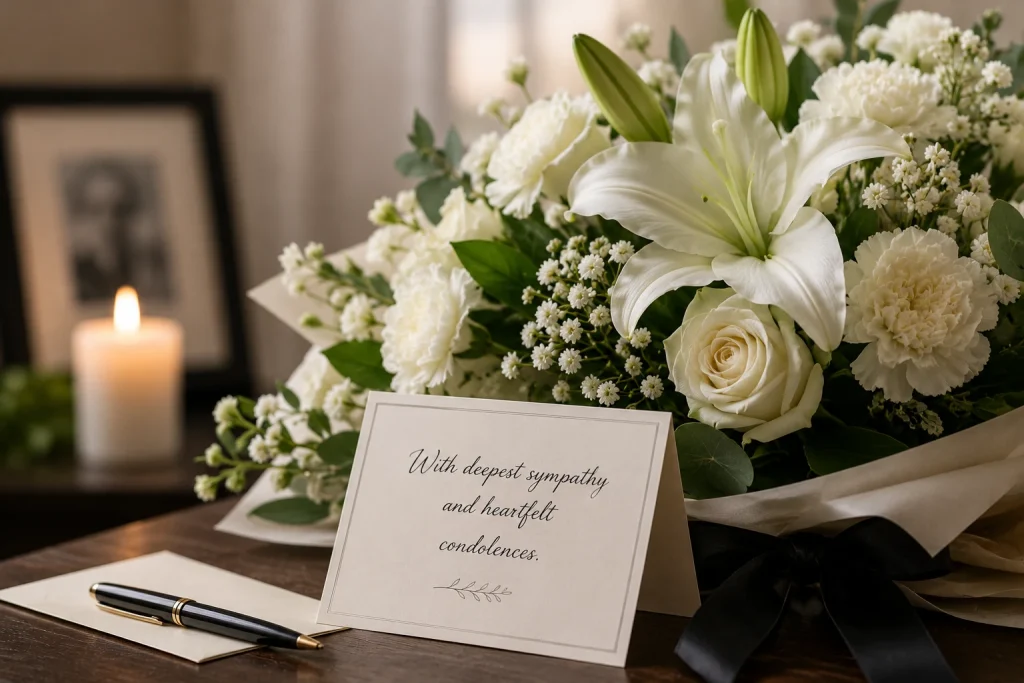
Funeral flower cards are intentionally small. They are usually the exact size of a standard business card. This small size severely limits the amount of text you can write.
Long stories or detailed memories do not fit on these cards. You must keep your message brief and direct. Reserve longer messages for a formal sympathy card sent to the family home.
The florist writes or prints the text onto the card for you. Short sentences ensure the text remains legible and clean.
Addressing the Right Audience
You must decide who the message is addressing before you write. You can address the note directly to the deceased person. For example, you can write “In loving memory of John.”
You can also address the grieving family members directly. An example is “Thinking of the Smith family today.”
It is also acceptable to leave the card unaddressed. You can simply offer a general sentiment of grief or support without naming anyone.
Etiquette for Group Signatures
Groups of coworkers often pool money to send a large arrangement. Signing a group card requires specific etiquette to avoid clutter.
List the company or department name clearly at the bottom. An example is “From the team at Marketing Dept.”
Do not try to squeeze twenty individual names onto a small card. The family will understand who the group represents based on the title.
Crafting Messages for Immediate Family
Acknowledging Deep Loss
Messages for immediate family members are highly personal. They acknowledge a deep and significant emotional loss.
You want to offer comfort without overwhelming the readers. Keep the tone warm, respectful, and supportive.
The family will read these cards during or after the service. Your words should provide a small moment of peace.
Addressing a Grieving Spouse
Losing a partner is a devastating experience. Messages to a widow or widower should offer absolute support.
Acknowledge the strength of their marriage and their shared life. Offer your physical presence or help in the coming days.
- Their love for you was clear to everyone.
- We mourn the loss of your wonderful partner.
- Sending you strength as you remember your beautiful marriage.
- I am always here for you in the days ahead.
Addressing Grieving Children
Children losing a parent face a long healing process. Keep your messages simple and highly supportive for them.
Remind them how proud their parent was of their achievements. This offers comfort and reinforces positive memories.
- Your father spoke of you with such pride.
- Your mother’s love for you will last forever.
- We are so sorry for the loss of your wonderful parent.
- Holding your family close in our thoughts today.
Signing Off Personal Cards
Always sign your name clearly at the bottom of the card. Include your last name if the family might not recognize your first name.
Families rely on these signatures for their administrative records. They use these names when writing their own thank you notes after funeral to friends.
Clear handwriting from the florist ensures your support is registered properly.
Messages for Friends and Colleagues
Reflecting Shared History
Writing to a friend requires a slightly different approach. You want to reflect warmth and shared history in your words.
Acknowledge the joy the person brought into your life. Keep the focus on positive memories and lasting friendship.
These messages celebrate a life well lived. They offer comfort by showing how much the person mattered to others.
Examples for Close Friends
- Treasured memories of a true and loyal friend.
- You brought so much joy to our lives.
- Gone from our sight, but never from our hearts.
- I will cherish our memories together forever.
- Thank you for a lifetime of wonderful friendship.
- Rest peacefully, my dear friend.
Professional Sentiments for Coworkers
Messages for colleagues should remain professional and respectful. Avoid overly casual language or internal workplace jokes.
Focus on respect for the deceased and support for their family. These cards are often read by people who did not know you.
Maintaining a respectful and distant tone is the safest approach.
Examples for Professional Acquaintances
- With deepest sympathy from everyone at the office.
- Our thoughts are with your family today.
- Wishing you peace and comfort during this time.
- We are deeply saddened by this loss.
- With sincere condolences from the management team.
- Honoring the memory of a wonderful colleague.
Religious and Spiritual Sentiments
Matching Family Beliefs
You should carefully consider the religious beliefs of the family. If you know their specific faith, you can include spiritual quotes.
Do not use religious quotes if the family is strictly secular. Respecting their personal beliefs is a basic rule of etiquette.
When in doubt, a standard secular message is always safe.
Traditional Faith-Based Quotes
- Rest in peace in God’s hands.
- May angels guide you to your eternal rest.
- Praying for peace and comfort for your family.
- God bless you and keep you always.
- May heaven welcome a beautiful soul today.
- In God’s care you rest above.
Secular Alternatives
- Wishing you peace and gentle healing.
- May you find comfort in the days ahead.
- Sending strength and love during this dark time.
- Holding you close in our thoughts today.
- May beautiful memories bring you peace.
- Sending our deepest sympathies today.
The Mechanics of Sending Flowers
Working with Local Florists
Local florists understand the requirements of nearby funeral homes. They know exactly when and where to deliver arrangements.
You should provide the florist with the correct details immediately. Give them the full legal name of the deceased person.
Provide the exact address of the funeral home or church. Give them the scheduled time of the viewing or service.
Budgeting for Floral Tributes
Funerals are expensive events for everyone involved. You do not need to spend hundreds of dollars to show support.
A modest arrangement with a sincere note is highly valued. The family remembers the sentiment, not the final price tag.
Group pooling is a smart way to manage these costs effectively.
Deliveries to the Funeral Home
Never send floral arrangements directly to a church early. Send them to the funeral home instead.
The funeral director will transport the flowers to the church or graveside. They organize the displays around the casket professionally.
This takes the heavy burden of logistics off the grieving family.
Post-Service Considerations
How Families Process Cards
Funeral directors collect all the small cards after the service. They usually hand them to the family in a dedicated envelope.
The family reads these cards in private at a later date. This is why clear signatures and brief messages are so important.
They use these physical cards to track who sent which specific arrangement.
Understanding Floral Displays
Families often match specific flowers to the personality of the deceased. They might request specific colors or plant types for the viewing.
Music is also used to match the mood of the floral displays. A director might hire musicians to play classical pieces during the viewing.
A musician reading notes of the viola adds a solemn tone to the room. The deep, warm sound complements the quiet atmosphere of the floral room.
Other musicians might play high, delicate melodies. Someone reading violin g string notes provides a sharp, emotional contrast.
These elements work together to create a respectful memorial environment.
Dealing with Donation Requests
Families sometimes ask for donations instead of flowers. You will see the phrase “in lieu of flowers” in the obituary.
You must respect this specific wish without exception. You can still send a physical sympathy card to the house.
Do not send floral arrangements if the family explicitly declines them. Respecting their wishes is the highest form of sympathy.
Avoiding Common Mistakes
Checking Spelling and Details
The most common mistake is misspelling the name of the deceased. Always double-check the spelling before submitting your order.
Check the spelling of the family’s last name as well. Errors on sympathy cards can cause unintended distress.
Review the final text with the florist before they print the card.
Avoiding Clichés and Insensitive Remarks
Do not write that you know exactly how the family feels. Grief is a highly individual experience for every person.
Avoid stating that the person is in a better place. This can sound dismissive of the family’s current pain.
Stick to simple statements of love, memory, and support.
Handling Late Deliveries
Order your flowers at least forty-eight hours before the service. Late deliveries disrupt the funeral director’s careful organization.
If you miss the funeral date, do not send flowers to the grave. Send a houseplant or a sympathy card directly to the family’s home instead.
This shows you care without creating logistical issues for the staff.
Frequently Asked Questions
What is the standard size of a funeral flower card?
These cards are typically the size of a standard business card. This small dimension limits your message to one or two short sentences at most.
Who should I address the note to?
You can address it directly to the deceased or the surviving family members. Leaving the card unaddressed with a general sentiment is also perfectly acceptable.
How do coworkers sign a group floral arrangement?
Coworkers should sign the card using their department or company name. You should avoid writing a long list of individual names on a small card.
Is it okay to send religious messages?
Religious messages are appropriate if you know the family shares those specific beliefs. You should use secular messages if you are unsure of their personal faith.
Do families keep these small cards?
Yes, funeral directors collect these cards and give them to the family. Families use them to write thank you notes in the weeks following the service.
Final Verdict
Writing sympathy messages requires a direct and respectful approach. The physical limitations of the card demand brevity and clarity. You must focus on offering comfort without overwhelming the grieving family.
Always ensure your spelling is accurate before finalizing the order with the florist. Choose your words based on your specific relationship with the deceased person. Families deeply appreciate the thought and effort behind these small gestures of support.
Review the examples provided to find the right tone for your specific situation. A simple, honest message of sympathy is always the best choice.