
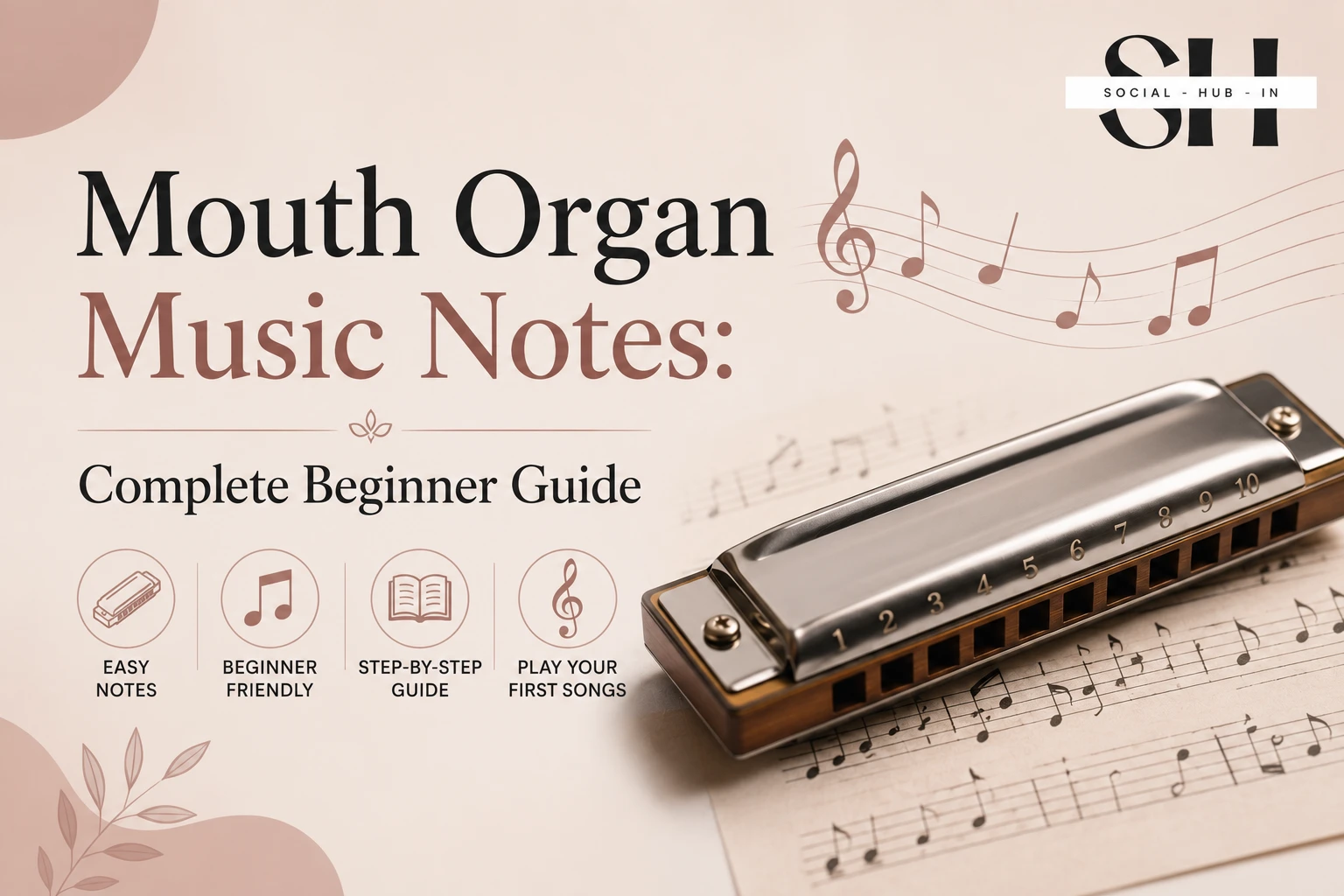
People commonly call the mouth organ a harmonica. It is a highly portable wind instrument. Musicians use it primarily for blues, folk, and rock music. Learning how to read the tablature takes practice.
We outline the standard tuning layout below. You will learn how to produce single pitches and full chords. Understanding the numbering system is your first step toward mastering the instrument.
Harmonica types and design
The standard diatonic model
The ten hole diatonic harmonica is the most common model available. Manufacturers build it to play in one specific key. Most beginners start with an instrument tuned to C major.
It spans three full octaves from bottom to top. The design intentionally omits certain pitches. This omission makes playing specific chords much easier for the musician.
The chromatic alternative
Chromatic harmonicas feature a different mechanical design. They include a physical button on the right side. Pressing this button opens a different set of internal reeds.
This mechanism allows the player to access all twelve half steps. You can play any sharp or flat using this model without bending notes.
Reading the tablature system
The basic number format
Musicians rarely use standard sheet music for this instrument. Most players rely on a specialized number system. Teachers call this system tablature or tabs.
The numbers one through ten represent the specific holes on the instrument. You read the numbers sequentially from left to right. Beginners use these tabs to learn simple tunes quickly. Finding basic hot cross buns song notes builds early confidence.
Blow and draw indicators
Every hole produces two different sounds. You create the first sound by exhaling. Musicians call this action a blow note. Tablature indicates a blow note with a positive number. Some writers use an upward arrow instead.
You create the second sound by inhaling. This action produces a draw note. Tabs show a draw note with a negative sign or a downward arrow.
The C major tuning layout
The lower and middle registers
Hole one produces a C when blowing and a D when drawing. Hole two produces an E on the blow and a G on the draw. Hole three creates a G when exhaling and a B when inhaling.
Hole four gives a C on the blow and a D on the draw. Hole five gives an E and an F. Hole six produces a G and an A.
The upper register flip
The pattern changes entirely at the seventh hole. The blow pitch suddenly becomes higher than the draw pitch. Hole seven produces a C when exhaling and a B when inhaling.
Hole eight gives an E and a D. Hole nine produces a G and an F. Hole ten gives a C and an A. This flip confuses many beginners initially.
Playing basic chord progressions
Creating the C major chord
A chord requires playing multiple pitches at the exact same time. The diatonic layout makes this process very easy. You blow into holes one, two, and three simultaneously.
This action produces the notes C, E, and G. These three pitches form a perfect C major chord. This chord provides a bright and stable sound.
Creating minor and secondary chords
You can produce a G major chord just as easily. You inhale across holes two, three, and four simultaneously. This draws the notes G, B, and D.
You can also play a D minor chord. Draw air through holes four, five, and six. This action combines the pitches D, F, and A. Teachers often track how fast students learn these chords. An instructor might log performance data using integra web form notes after a lesson.
Advanced breathing techniques

The concept of bending
The diatonic model lacks several standard pitches. Players use a technique called bending to find them. Bending involves changing the shape of your mouth and tongue.
This physical change lowers the pitch of a standard note. You can bend the four draw down to a D flat. It requires strong lung control and practice. Adjusting your breathing takes physical effort. Beginners must monitor their air intake to avoid dizziness or any initio side effect notes related to hyperventilation.
Overblowing and overdrawing
Overblowing is a highly advanced acoustic technique. It forces the brass reed to vibrate in the opposite direction. This produces a pitch higher than the standard note.
Overdrawing applies the exact same concept to inhaled notes. These techniques unlock the missing chromatic pitches on a diatonic model. Very few beginners master this skill in their first year.
Proper hand positioning and grip
The basic left hand hold
You must hold the instrument securely to maintain control. Place the harmonica in the web of your left hand. Your left index finger should rest along the top cover plate.
Your left thumb supports the bottom plate. Keep your remaining fingers relaxed and slightly curved. This grip provides stability while moving the instrument across your lips.
Creating a sound cup
Your right hand acts as a natural sound chamber. Bring your right hand up to meet your left hand. Close the gaps between your fingers.
This creates a tight cup around the back of the instrument. Opening and closing this cup changes the tone rapidly. This motion creates a natural vibrato effect during play.
Instrument maintenance and care
Cleaning the reeds
Harmonicas collect moisture and debris during regular use. You should tap the instrument against your palm after playing. This removes excess saliva from the internal reed plates.
Let the instrument dry completely before putting it in its case. Do not share your mouth organ with other people. This prevents the spread of bacteria.
Avoiding physical damage
The internal brass reeds are very fragile. Blowing too hard can crack or permanently bend them. Warm up the instrument in your hands before playing in cold weather.
Cold reeds snap much faster than warm ones. Store the harmonica in a hard case to prevent crushing damage.
Frequently asked questions
What is the best harmonica key for beginners?
The key of C major is the standard starting point. Most instructional books and online videos use a C harmonica for their lessons.
How do you read negative numbers in tablature?
A negative number tells you to inhale through that specific hole. Musicians officially call this action a draw note.
What does Richter tuning mean?
Richter tuning refers to the standard note layout on a ten hole diatonic harmonica. The inventor created this layout specifically to allow easy chord playing.
Can you play flats and sharps on a diatonic model?
You cannot play them normally. You must learn advanced bending or overblowing techniques to produce those missing pitches.
Final Takeaways
Learning the mouth organ takes patience and consistent air control. You must memorize the numbering system before attempting complex melodies. Practice isolating single holes to produce clear sounds first.
Do not rush into bending techniques until your basic chords are solid. The C major diatonic model is your best tool for early learning. Keep your breathing relaxed to avoid fatigue. Regular daily practice will build the muscle memory required for faster playing.